


Modern chemical industrial production involves a large number of material conveying, pulverizing, flue gas treatment and environmental protection processes. Unlike single abrasion working conditions in mining or coal washing plants, chemical factory equipment faces composite damage mechanisms including solid particle abrasion, high-speed fluid scouring, weak acid and alkali slurry corrosion, alternating temperature changes and continuous cyclic impact. Most chemical production lines operate 24/7 all year round, making vulnerable equipment such as pipelines, silos, fans and milling components suffer rapid thinning, local perforation, deformation and frequent blockage. Traditional carbon steel, alloy steel and ordinary rubber liners struggle to adapt to long-term high-load and multi-factor complex working conditions, resulting in frequent unplanned shutdowns, high spare part consumption and increased operational risks.Chemical production stability relies heavily on the integrity of auxiliary systems including coal conveying, powder preparation, powder feeding, ball milling, ash discharge, desulfurization and dust removal. Once key wearing components fail, the entire production batch will be affected, causing unstable product quality and huge economic losses. To solve the universal industry pain point of short equipment service life and high maintenance costs, more chemical enterprises choose high-performance industrial ceramic anti-wear solutions. Wear-resistant ceramic parts adopt high-purity alumina ceramic materials with Mohs 9 ultra-high hardness, excellent chemical inertness and stable high-temperature resistance. They can resist both strong particle abrasion and medium corrosion in chemical environments, achieving 8–15 times longer service life than traditional metal wear parts.This article systematically sorts out the full-scene application scope of wear-resistant ceramic lining in chemical industry core systems, covering seven major modules: coal conveying system, pulverizing system, powder feeding system, ball milling system, ash discharge system, desulfurization system and dust removal system. It elaborates on the anti-wear value of each equipment component, analyzes working condition characteristics and optimization advantages, and provides professional reference for chemical plant equipment anti-wear upgrading and daily operation maintenance.
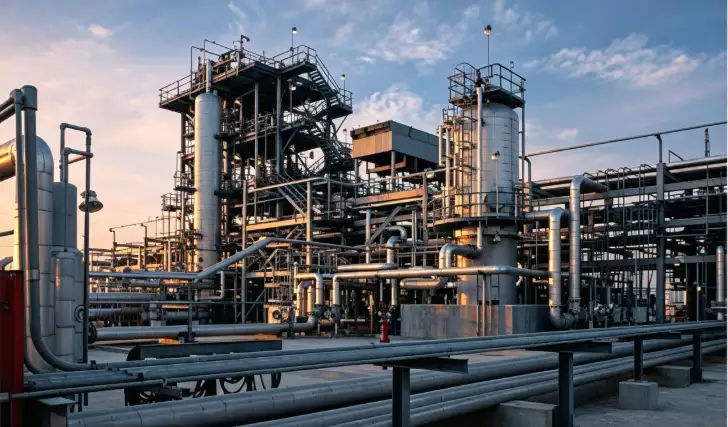
Chemical industrial working conditions are characterized by diversified materials, complex medium attributes and continuous high-intensity operation, which put forward higher comprehensive performance requirements for anti-wear materials. Industrial wear-resistant ceramic lining has unique advantages that perfectly match chemical plant production environments compared with traditional metal and rubber materials.First, dual resistance to abrasion and corrosion. Chemical equipment bears not only coal powder, ash slag and solid particle scouring but also long-term erosion of acidic, alkaline and slurry media. High-density alumina ceramic has stable chemical inertness, does not react with most chemical media, and effectively avoids corrosion failure while resisting particle abrasion. Second, ultra-high structural stability. Customized mosaic ceramic tiles, bolt-fixed ceramic steel composite plates and vulcanized ceramic rubber structures can adapt to high-speed fluid impact and cyclic temperature changes without peeling, cracking or falling off.Third, smooth and non-sticking surface. The dense and seamless ceramic inner wall prevents material adhesion, coal accumulation and pipeline blockage, ensuring stable material transportation and gas flow, and reducing manual cleaning frequency. Fourth, wide temperature adaptability. It can operate stably from normal temperature to high-temperature flue gas environments, meeting the working condition requirements of milling, combustion and flue gas treatment links. Fifth, flexible personalized customization. According to complex chemical equipment structures such as special-shaped pipelines, fan impellers, cone separators and curved hoppers, custom wear-resistant ceramic components can be processed to realize full-coverage precise protection of all vulnerable parts.
The coal conveying system is the front-end guarantee of chemical thermal processing and reaction systems, responsible for stable transportation and storage of raw coal materials. Raw coal and coal particles have high hardness and irregular shapes, causing continuous impact and sliding abrasion on conveying and storage equipment. Wear-resistant ceramic lining is widely applied to coal drop hoppers, coal drop pipes, bucket wheel discs, conveyor drum rubber coating and raw coal silos, solving the problems of rapid wear, material leakage and blockage of traditional coal conveying equipment.Coal drop hoppers and coal drop pipes are the most severely worn parts in the conveying system. Material free fall and high-speed sliding cause concentrated scouring on the inner wall, leading to rapid perforation and coal leakage of steel structures. Laying mosaic ceramic tiles on the inner wall effectively resists particle impact and abrasion, maintains complete pipeline and hopper structure, and avoids material waste and site dust pollution. Bucket wheel discs undertake continuous material stacking and reclaiming work, bearing cyclic lump coal impact. Ceramic lining disperses impact force and eliminates local gouging wear.Conveyor drum ceramic rubber coating adopts composite structure of rubber substrate and embedded ceramic particles, which improves friction coefficient to prevent belt slippage and deviation, while resisting coal dust abrasion on the drum surface. Raw coal silos suffer long-term static friction and dynamic impact of stacked coal materials. The smooth ceramic inner wall prevents wet coal adhesion and bridging blockage, stabilizes continuous feeding efficiency, and ensures stable raw coal supply for subsequent pulverizing and processing systems.
The pulverizing system is the core link of coal fine processing in chemical plants, which crushes raw coal into qualified fine coal powder through high-speed mechanical operation to meet the requirements of combustion and chemical reaction processes. The internal equipment operates in high-speed particle circulation state all year round, with extremely severe abrasion. Ceramic anti-wear protection covers medium-speed mill cylinder bodies, separator outlet pipelines, primary air ducts and elbows, separator inner cones and guide vanes.The cylinder body of medium-speed coal mills bears long-term rolling and friction of coal materials and grinding media. Traditional metal liners wear rapidly, affecting grinding efficiency and powder fineness. High-strength wear-resistant ceramic lining stabilizes the internal structure of the mill, improves overall wear resistance, and extends the service cycle of grinding equipment. Separator outlet pipelines, primary air ducts and elbows are scoured by high-speed mixed flow of air and coal powder for a long time. The directional change of fluid causes concentrated erosion at elbows and tee joints, which is completely solved by ceramic lining renovation.Separator inner cones and guide vanes are key components for coal powder classification and flow guidance. Surface wear will change internal flow field and classification accuracy, resulting in unqualified coal powder fineness and affecting subsequent production quality. After pasting wear-resistant ceramic tiles, the structural size and surface flatness of guide vanes and cone components remain stable for a long time, ensuring accurate powder classification and stable operation of the entire pulverizing system. For chemical plant pulverizing system anti-wear upgrading, integrated solutions are available atprofessional ceramic wear-resistant parts for pulverizing systems.
The powder feeding system transports qualified fine coal powder to reaction and combustion equipment stably and quantitatively, which determines the stability of chemical production thermal parameters and reaction efficiency. The system operates with high-speed powder airflow for a long time, and equipment inner walls suffer continuous fine particle scouring. Wear-resistant ceramic lining is widely used in exhaust fan housings, exhaust fan impellers, coal powder pipelines, thermometer protective sleeves, coal powder mixers and expansion joints.Exhaust fan housings and impellers are core moving components of the powder feeding system. High-speed coal powder continuously scours the blade surface and shell inner wall, causing thinning, pitting and unbalanced vibration of fan components, which easily leads to equipment failure and shutdown. Ceramic lining protects the metal matrix of impellers and shells, eliminates abrasive damage, and maintains dynamic balance of fan operation. Coal powder pipelines undertake long-distance powder transportation, and the inner wall is worn by high-speed fine powder all year round. Ceramic-lined pipelines effectively avoid pipe wall thinning and powder leakage.Thermometer protective sleeves are directly exposed to high-speed powder flow, prone to wear and failure which affects temperature monitoring accuracy. Ceramic protective sleeves have both wear resistance and temperature resistance, ensuring real-time and accurate data monitoring. Coal powder mixers and expansion joints are vulnerable to local scouring and deformation due to frequent flow changes and thermal expansion and contraction. Customized ceramic wear-resistant components stabilize the structural integrity of mixing and telescopic parts, ensuring uniform powder mixing and safe and stable pipeline operation.
The steel ball mill system is applied for fine grinding and secondary classification of coal powder and chemical raw materials, widely used in fine processing links of chemical production. The internal material circulation is complex, with multiple stages of separation and return flow, resulting in multi-angle and multi-frequency material scouring. Ceramic anti-wear protection covers mill outlet pipelines, wood chip separators, coarse and fine powder separators and powder return pipes.Mill outlet pipelines connect the grinding cavity and separation equipment, bearing mixed scouring of coarse particles and fine powder. Long-term operation easily causes pipeline wear and material leakage. Ceramic lining effectively improves the anti-scouring ability of the pipeline and extends the service life. Wood chip separators are responsible for removing sundries in coal powder. The inner wall is prone to abrasion and blockage, and ceramic smooth surface ensures smooth sundry separation and avoids equipment clogging.Coarse and fine powder separators are key equipment for powder grading. Internal structural wear will directly affect powder classification precision, resulting in unqualified product fineness. Wear-resistant ceramic lining maintains the original structural size and flow field of the separator, ensuring stable grading effect. Powder return pipes transport unqualified coarse powder back to the mill for re-grinding. Repeated material circulation causes severe pipeline wear. Ceramic-lined return pipes solve the problem of rapid wear of circulating pipelines, reduce maintenance frequency, and ensure continuous and stable operation of the ball mill system.
The ash discharge system is responsible for the transportation and discharge of boiler ash, slag and solid waste residues in chemical plants. The medium has high hardness and strong scouring force, causing serious wear on conveying equipment. Wear-resistant ceramic lining is suitable for ash discharge pipelines, dry ash fan housings, dry ash fan impellers, air valve plates and cylinder walls, and slag conveying pipelines.Ash discharge pipelines and slag conveying pipelines are the most severely worn parts of the ash discharge system. High-speed ash and slag particles cause continuous sliding and impact abrasion on the pipe wall, and ordinary steel pipelines are prone to perforation and leakage within a short service cycle. Ceramic composite lined pipelines have super wear resistance, which can withstand long-term ash and slag scouring and completely solve the problem of pipeline failure.Dry ash fan housings and impellers work in high-speed ash-laden airflow environments. Ash particle erosion easily causes blade wear, fan vibration and reduced air volume. Ceramic anti-wear protection stabilizes fan performance and reduces failure rate. Air valve plates and cylinder walls are frequently impacted and rubbed by ash materials during opening and closing processes. Ceramic lining improves surface hardness and wear resistance, ensures flexible valve switching and reliable sealing performance, and avoids ash leakage caused by component wear.
The desulfurization system is a key environmental protection facility for chemical flue gas treatment, responsible for removing sulfide from flue gas to meet emission standards. The system transports limestone powder and alkaline slurry media, which have dual characteristics of solid particle abrasion and weak chemical corrosion. Wear-resistant ceramic lining is mainly used for limestone conveying pipelines and slurry conveying pipelines.Limestone conveying pipelines transport granular limestone raw materials. Hard mineral particles cause continuous scouring on the pipe wall, leading to rapid wall thinning. Ceramic lining effectively resists particle abrasion and extends pipeline service life. Slurry conveying pipelines carry mixed liquid of water, limestone powder and chemical reaction residues, which have both abrasive and corrosive properties. Traditional metal pipelines are prone to wear and corrosion damage, while ceramic materials have excellent anti-abrasion and anti-corrosion comprehensive performance, adapting to long-term slurry transportation working conditions.The smooth inner wall of ceramic pipelines reduces slurry adhesion and pipeline blockage, ensures stable slurry transportation flow and uniform reaction dosage, improves desulfurization efficiency, and reduces manual cleaning and pipeline maintenance costs. Stable desulfurization system operation helps chemical enterprises meet environmental protection emission standards and avoid production shutdown losses caused by environmental protection equipment failure. Reliable desulfurization system anti-wear solutions are provided by chemical industrial ceramic wear-resistant lining parts.
The dust removal system collects and purifies flue gas and dust generated during chemical production, ensuring clean workshop environment and up-to-standard flue gas emission. The high-speed dust-laden airflow causes continuous abrasion on flue gas conveying and purification equipment. Wear-resistant ceramic lining covers induced draft fan guide impellers, induced draft fan housings, dust removal pipelines, dust removal elbows and dust removal tees.Induced draft fan guide impellers and housings are core power components of the dust removal system. Long-term scouring of high-speed dust particles causes component wear and dynamic imbalance, resulting in fan noise, vibration and reduced air volume. Ceramic wear-resistant protection maintains the complete structure and dynamic balance of fan components, ensures stable dust removal air volume and efficient flue gas purification.Dust removal pipelines, elbows and tees are key connecting components of the flue gas system. The flow direction changes frequently at elbows and tees, resulting in concentrated dust scouring and the most serious local wear. Ceramic lining carries out full-coverage anti-wear protection for all wear hot spots, effectively avoiding pipeline perforation, air leakage and dust leakage. It stabilizes the overall operating efficiency of the dust removal system, reduces equipment failure rate, and creates a safe, clean and environmentally friendly production environment for chemical workshops.
The full-scene application of wear-resistant ceramic lining in chemical industry seven major systems brings multi-dimensional value improvement for production and operation. First, it greatly extends equipment service life. Ceramic anti-wear components increase the service cycle of pipelines, fans, silos and milling equipment by more than 10 times, reducing frequent equipment replacement and renovation workload. Second, it stabilizes production quality and efficiency. Stable equipment structure and smooth material flow ensure stable coal powder fineness, uniform slurry proportion and efficient flue gas treatment, avoiding production fluctuation and product quality problems caused by equipment wear.Third, it comprehensively reduces operating costs. Although the one-time investment of ceramic lining is slightly higher than traditional materials, it saves a large amount of spare part procurement costs, manual maintenance costs and production stop loss in the whole life cycle, with extremely high long-term cost performance. Fourth, it improves safety and environmental protection level. It avoids material leakage, dust pollution and equipment failure risks caused by component wear, ensures continuous and safe operation of environmental protection equipment, and helps enterprises meet standardized production requirements.Fifth, it reduces labor pressure. The low failure rate and low maintenance characteristics of ceramic wear-resistant parts reduce daily inspection and maintenance frequency, save human resources, and improve the refined management level of chemical plant equipment.
Chemical production auxiliary systems such as coal conveying, pulverizing, powder feeding, ball milling, ash discharge, desulfurization and dust removal are the basic guarantee for stable and efficient operation of the entire chemical production line. Complex working conditions of particle abrasion, fluid scouring and medium corrosion lead to frequent wear and failure of traditional metal equipment, which has always been a key bottleneck restricting chemical plant production efficiency. Wear-resistant ceramic parts achieve precise anti-wear protection for all vulnerable equipment in chemical industry scenarios, covering every key component of the seven major systems.With superior wear resistance, corrosion resistance, structural stability and low maintenance characteristics, ceramic lining effectively solves industry pain points such as rapid equipment wear, frequent blockage, unstable operation and high maintenance costs. It stabilizes production continuity, improves product qualification rate, reduces comprehensive operating costs, and enhances the overall safety and environmental protection level of chemical plants. As an efficient and mature anti-wear solution, wear-resistant ceramic lining has become an indispensable technical choice for modern chemical enterprises to realize cost reduction, efficiency improvement and stable production operation.

Подайте ваш запрос,
Мы свяжемся с вами как можно скорее.

Sanxin New Materials Co., Ltd. специализируется на производстве и продаже керамических бусин и деталей, таких как шлифовальные средства, струйные бусины, подшипник, часть конструкции, керамические износостойкие вкладыши, наночастицы нанопорошка


 Английский язык
 Английский язык
 Русский язык
 Французский язык
 На испанском языке
 На португальском языке
 Арабский язык